Attribution Creative Commons Noncommercial No Derivatives Share Alike Zero

Muthuchippi Malayalam Hot Stories Pdf Site

is a long-standing Malayalam entertainment magazine that has built a dedicated following since its launch in 1968. While often associated with "kambi kathakal" (erotica or spicy stories) in digital spaces, the publication itself covers a broad spectrum of pop culture, including cinema news, celebrity gossip, and lifestyle topics. The Evolution of Muthuchippi Content

How are changing modern Malayalam fiction

Whether you are seeking a nostalgic trip through its classic stories or looking for the latest home and health tips, Muthuchippi remains a vibrant part of the Malayalam digital community. particular genre within the Muthuchippi archives to start reading? MuthuChippi Kambi Kathakal - Free APK Download for Android

In the vast ocean of Malayalam literature, certain publications shine like pearls within an oyster—rare, luminous, and deeply cherished. One such gem is (മുത്തുച്ചിപ്പി), a name that translates to "pearl oyster." For decades, this iconic magazine has been synonymous with enriching narratives, moral storytelling, and wholesome family entertainment. muthuchippi malayalam hot stories pdf

Muthuchippi occupies a polarized yet significant space in Kerala's cultural dialogue. It is praised by many for and providing a healthy outlet for entertainment, while others have historically criticized its bold content. Regardless of the debate, its enduring popularity highlights a significant demand for lifestyle content that reflects the realities of modern life and human relationships in Malayalam literature. If you are interested, I can: Recommend specific authors known for this genre.

Use text-to-speech apps (e.g., @Voice Aloud Reader) to convert your Muthuchippi PDFs into Malayalam audio. Listen during commute or cooking—bringing entertainment into your lifestyle seamlessly.

The name Muthuchippi (literally "pearl oyster") perfectly captures his style—small, hard shells containing precious, luminous truths about human nature. is a long-standing Malayalam entertainment magazine that has

: The magazine frequently includes quizzes, contests, and reader-submitted tips. Accessing Muthuchippi Stories (PDF & Online)

: You can find interactive versions and series on platforms like , where authors frequently update their latest chapters. PDF Collections

The legacy of Muthuchippi remains a notable footnote in the history of Kerala’s pop culture, illustrating how traditional print media adapts, survives, and transforms within the digital landscape. To explore this topic further, The of online publishing under the IT Act. particular genre within the Muthuchippi archives to start

The Information Technology Act, 2000 (specifically Section 67) regulates the publication and transmission of obscene material in electronic form. While reading text privately generally falls into a grey area, hosting, distributing, or publishing such content online can lead to legal penalties.

: A core part of the magazine focuses on beauty tips, fashion trends, and health advice tailored for women. Culture & Entertainment

: The magazine features exclusive interviews with Malayalam actors, movie reviews, and behind-the-scenes trivia.

So go ahead. Download that PDF. Brew a cup of chaya . Sit by the window on a rainy evening. And let Muthuchippi transport you to a Kerala that lives forever—in pixels and in the heart.
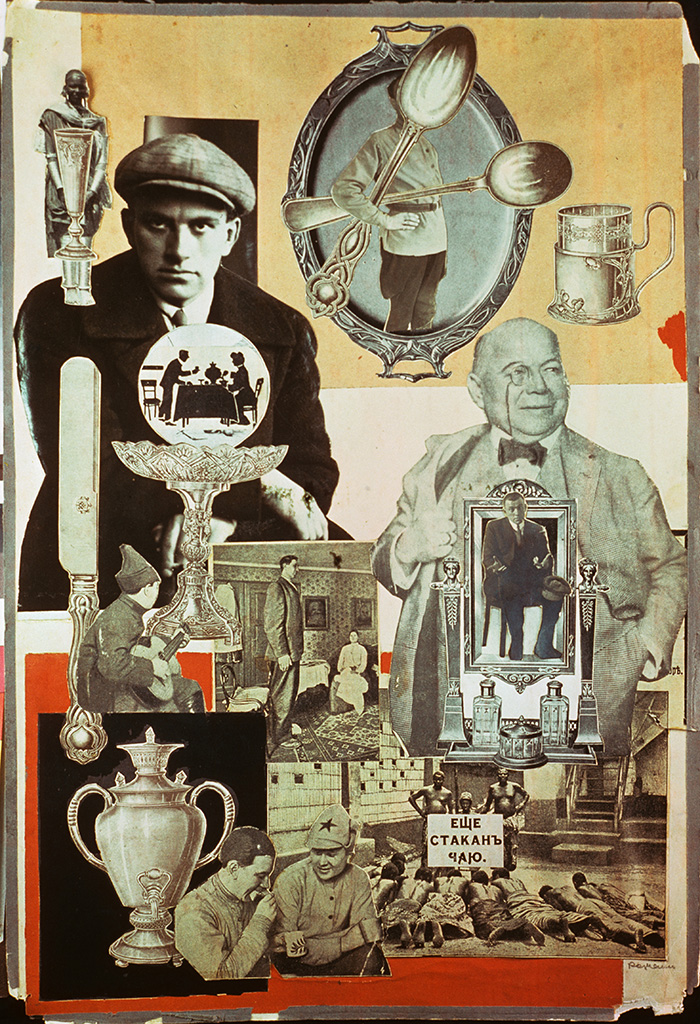
Fig. 1. — Brigade KGK (Viktor Koretsky [1909–98], Vera Gitsevich [1897–1976], and Boris Knoblok [1903–84]). “We had to overcome among the people in charge of trade the unhealthy habit of distributing goods mechanically; we had to put a stop to their indifference to the demand for a greater range of goods and to the requirements of the consumers.” From the 16th to the 17th Congress of the All-Union Communist Party (Bolsheviks), 1934, no. 57, gelatin silver print, 22.7 × 17 cm. Los Angeles, Getty Research Institute, 2014.R.25.
Fig. 2. — Brigade KGK (Viktor Koretsky [1909–98], Vera Gitsevich [1897–1976], and Boris Knoblok [1903–84]). “There is still among a section of Communists a supercilious, disdainful attitude toward trade in general, and toward Soviet trade in particular. These Communists, so-called, look upon Soviet trade as a matter of secondary importance, not worth bothering about.” From the 16th to the 17th Congress of the All-Union Communist Party (Bolsheviks), 1934, no. 56, gelatin silver print, 22.7 × 17 cm. Los Angeles, Getty Research Institute, 2014.R.25.
Collage of photographs showing Vladimir Mayakovsky surrounded by a silver samovar, cutlery, and trays; two soldiers enjoying tea; a giant man in a bourgeois parlor; and nine African men lying prostrate before three others who hold a sign that reads, in Cyrillic letters, “Another cup of tea.”
Fig. 3. — Aleksandr Rodchenko (Russian, 1890–1956). Draft illustration for Vladimir Mayakovsky’s poem “Pro eto,” accompanied by the lines “And the century stands / Unwhipped / the mare of byt won’t budge,” 1923, cut-and-pasted printed papers and gelatin silver photographs, 42.5 × 32.5 cm. Moscow, State Mayakovsky Museum. Art © 2024 Estate of Alexander Rodchenko / UPRAVIS, Moscow / ARS, NY. Photo: Art Resource.
Fig. 4. — Boris Klinch (Russian, 1892–1946). “Krovovaia sobaka,” Noske (“The bloody dog,” Noske), photomontage, 1932. From Proletarskoe foto, no. 11 (1932): 29. Los Angeles, Getty Research Institute, 85-S956.
Fig. 5. — Brigade KGK (Viktor Koretsky [1909–98], Vera Gitsevich [1897–1976], and Boris Knoblok [1903–84]). “We have smashed the enemies of the Party, the opportunists of all shades, the nationalist deviators of all kinds. But remnants of their ideology still live in the minds of individual members of the Party, and not infrequently they find expression.” From the 16th to the 17th Congress of the All-Union Communist Party (Bolsheviks), 1934, no. 62, gelatin silver print, 22.7 × 17 cm. Los Angeles, Getty Research Institute, 2014.R.25.
Fig. 6. — Brigade KGK (Viktor Koretsky [1909–98], Vera Gitsevich [1897–1976], and Boris Knoblok [1903–84]). “There are two other types of executive who retard our work, hinder our work, and hold up our advance. . . . People who have become bigwigs, who consider that Party decisions and Soviet laws are not written for them, but for fools. . . . And . . . honest windbags (laughter), people who are honest and loyal to Soviet power, but who are incapable of leadership, incapable of organizing anything.” From the 16th to the 17th Congress of the All-Union Communist Party (Bolsheviks), 1934, no. 70, gelatin silver print, 22.7 × 17 cm. Los Angeles, Getty Research Institute, 2014.R.25.
Fig. 7. — Artist unknown. “The Social Democrat Grzesinski,” from Proletarskoe foto, no. 3 (1932): 7. Los Angeles, Getty Research Institute, 85-S956.
Fig. 8A. — Pavel Petrov-Bytov (Russian, 1895–1960), director. Screen capture from the film Cain and Artem, 1929. Image courtesy University of California, Berkeley, Berkeley Art Museum and Pacific Film Archive Library.
Fig. 8B. — Pavel Petrov-Bytov (Russian, 1895–1960), director. Screen capture from the film Cain and Artem, 1929. Image courtesy University of California, Berkeley, Berkeley Art Museum and Pacific Film Archive Library.
Fig. 8C. — Pavel Petrov-Bytov (Russian, 1895–1960), director. Screen capture from the film Cain and Artem, 1929. Image courtesy University of California, Berkeley, Berkeley Art Museum and Pacific Film Archive Library.
Fig. 9. — Herbert George Ponting (English, 1870–1935). Camera Caricature, ca. 1927, gelatin silver prints mounted on card, 49.5 × 35.6 cm (grid). London, Victoria and Albert Museum, RPS.3336–2018. Image © Royal Photographic Society Collection / Victoria and Albert Museum, London.
Fig. 10. — Aleksandr Zhitomirsky (Russian, 1907–93). “There are lucky devils and unlucky ones,” cover of Front-Illustrierte, no. 10, April 1943. Prague, Ne Boltai! Collection. Art © Vladimir Zhitomirsky.
of