Quality: Toxic Iii V1.41 -for Fl 7- Download Extra
an early stage Building Information Modeller
for the rest of us, mere mortal architects
a little bit goes a lot further
It is free.
Download now!
an early stage Building Information Modeller
for the rest of us, mere mortal architects
a little bit goes a lot further
Have you walked away...
TAD originated at a small architect's office in India in 1989. It is a different approach to BIM (Building Information Modelling) from what you may have seen elsewhere. It is based on fundamental architectural research. It is not a software
that was derived from other engineering fields and then modified to suit architects.
Since it is so much in touch with what architects really do, it is extremely efficient in doing it. The file-sizes of this BIM software are literally in kilobytes.
At the same time it has extensive querying capabilities. The architect can actually get objectivity from quite early on -- almost from the bubble-diagramming stages. For example; quantities, area calculations, municipal (local government)
calculations and so on. Such capability can even be extended using add-ons (probes)
I know the TAD system quite well, and it is an improvement on BIM in that in enables imprecise models to be represented to a far greater extent than BIM does. This is not surprising, since TAD is actually developed for architects and for architectural design, while BIM is developed for the AEC industry broadly and is now essentially a standard (via IFCs) for the industry and architects use it for design for reasons of productivity (for the same bad reason that they were consumers of AutoCAD back in the day).

When designing, we need to be in touch with the various spaces we use. After all, we are not termites -- who live inside built matter of the walls. An architect is quite interested in knowing how the spaces are inter-related, and whether they
would work for our users. The walls come as a bye-product of having made these spaces.
TAD respects such an approach. That is why it is very easy to start designing directly in TAD itself. It is like having a scratch pad handy.
But if you think this is just a bubble diagramming too ... well, it is not. You can even create the entire model; including the built matter that is present in the building.
What it does NOT do is drafting. For that, you can easily export from TAD and use the regular CAD software that you were using earlier.
The adjoining photo shows the internal stack through the tiny row-house.
The west wall has a bit of glass blocks. It not just lights up the space
but it drives the air inside the stack. This is a intricate vertical space
that goes through the row house to provide ventilation -- all modelled
inside TAD
TAD helps you iteratively design. Like a potter at work. At any point in time, you can extract objective information such as areas, distances and so on. What is the point of designing a building only to realize at the final stages that some
mathematical criteria was not right?
This capability of querying into the design is very powerful. TAD has a built in language called "ARDELA" (ARchitectural DEsign LAnguage) That can be used to create add-ons to provide additional querying functionality. These add-ons probe into
your model and provide you answers.
We would be releasing a marketplace for these probes -- and also a simple way for you to write your own probes too
The adjoining photo, a small gazebo kind of space was carved out on the
terrace on one part of the split-level in the rowhouse. An ARDELA area
add-on (probe) did all the calculations. We were then confident that we
can get that semi-enclosed space, without it being counted by the municipality
(in India, these area calculations are known as FSI calculations)
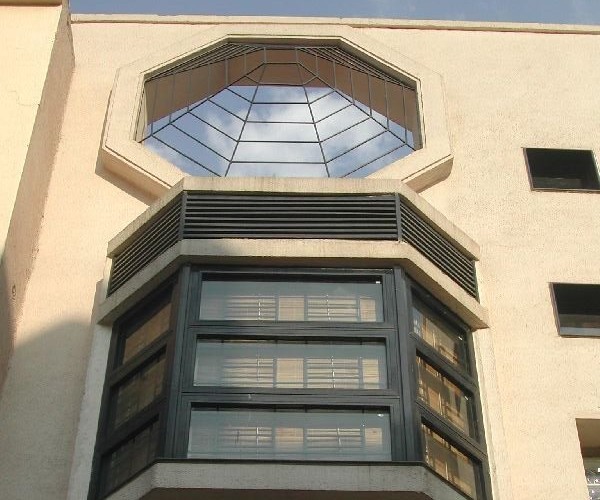
Over 3 million of actual built projects done over last 30 years. (From the office that created TAD) Scores of unbuilt ones
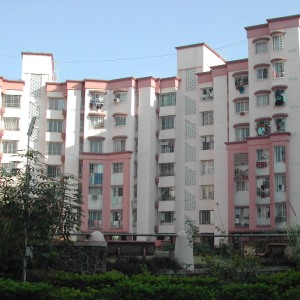
Nerul, Navi Mumbai, India
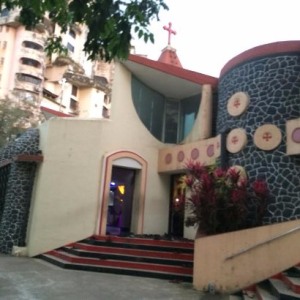
Nerul, Navi Mumbai, India
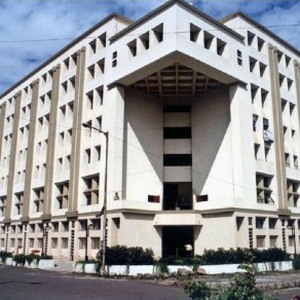
Nerul, Navi Mumbai
The feature set of Toxic III, while compact, is surprisingly deep.
However, many legacy producers still prefer the streamlined workflow and specific filter saturation of Toxic III V1.41. It represents a snapshot of a specific time in DSP (Digital Signal Processing) history. Safe Download and Installation Guide
: Be extremely cautious of third-party sites claiming to host "Toxic III V1.41" downloads. These are often unofficial and can contain malware or outdated DLL files that are unstable on modern systems. Image-Line search Modern Alternatives
Toxic III V1.41 -for FL 7- Download: The Classic FM Powerhouse
As a music producer, you're constantly on the lookout for innovative tools to elevate your sound and streamline your creative process. One such tool that's gained significant attention in recent years is Toxic III V1.41, a powerful plugin designed specifically for FL Studio 7. In this article, we'll dive into the world of Toxic III V1.41, exploring its features, benefits, and how to download it for use in your FL Studio 7 setup. Toxic III V1.41 -for FL 7- Download
Allows you to modulate any oscillator with any other oscillator, creating complex harmonic textures.
Toxic III allows users to configure the six operators in various algorithms, enabling everything from simple, bell-like tones to chaotic, harsh textures.
:
I should start by confirming the relevance of FL Studio 7. It's an older version, so maybe the user is working with legacy projects or has specific compatibility needs. Next, Toxic III V1.41 might be a collection of sounds, drum kits, or presets. I need to outline what the sample pack includes, how it integrates with FL Studio 7, and provide step-by-step instructions for downloading and installing it. The feature set of Toxic III, while compact,
, as its presets are largely compatible with the older Toxic III engine. Compatibility Note
If you want to dive deeper into legacy production, let me know: What are you planning to run this on? Do you need help finding original preset banks ? Share public link
Its feature set was surprisingly deep for a synth that was both powerful and user-friendly:
The mid-2000s were a golden era for music production. Image-Line’s FL Studio 7 was cementing its place as a powerhouse DAW, moving away from its "FruityLoops" drum-machine roots into a fully-fledged production environment. Alongside this evolution came iconic software synthesizers that defined the sound of electronic music, hip-hop, and industrial subgenres. Safe Download and Installation Guide : Be extremely
Since Toxic III is a legacy product, ensure you are running it in a 32-bit environment or using a VST bridge if you are trying to open it in modern versions of FL Studio (like FL 21/24).
While Toxic III V1.41 was revolutionary in 2006, Maxx Claster continued to refine the engine. Toxic III eventually evolved into . Toxic III V1.41 Toxic Biohazard Interface Original "Symmetric" Refined Modern Operators Sequencer Enhanced 64 Step Warmth Increased Optimization
Among these legendary plugins, stands out as a hybrid FM powerhouse. If you are a purist looking to recreate the exact sonic texture of 2007, or if you are running a legacy FL Studio 7 rig for stability and nostalgia, finding and installing this specific version is a rewarding journey. What is Toxic III?
A healthy community of producers discussing topics like sound design issues, installation problems, and feature requests has grown around the software. Many of these discussions can still be found on sites like and the official Image-Line forums , serving as a time capsule of the era's production techniques.
Choose your destination folder. For the FL native version, select the Plugins > Channels folder inside your FL Studio 7 directory. For the VST version, select your dedicated VST folder. Open FL Studio 7.

For far too long, we architects have not asked ourselves how we may do a better job in this world. Instead we just relied on some outside expertise and hand-me-downs. Let us rise and think for ourselves.